
Key Takeaways From The Governance 2026 Research Update
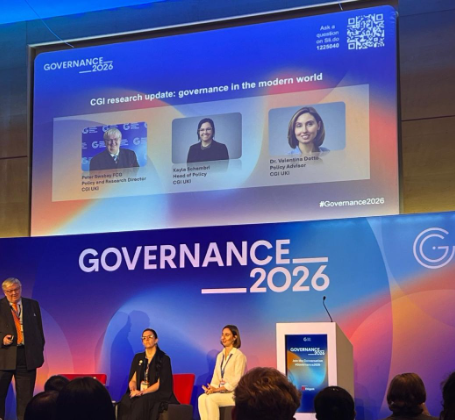
Governance continues to evolve as organizations respond to new technologies, changing workplace expectations and increasing regulatory responsibilities. At Governance 2026 by The Chartered Governance Institute UK & Ireland (CGIUKI) held in London, England, the session CGI Research Update: Governance in the Modern World presented new research and practical guidance that reflects the changing responsibilities of governance professionals.
The session featured representatives of The Chartered Governance Institute including Peter Swabey – FCG Policy and Research Director, Kayla Schembri – Head of Policy and Dr. Valentina Dotto – Policy Adviser. Together, they shared valuable insights into statutory governance during extended leave, AI governance emerging research on AI wastage and ongoing policy developments that will shape the future of governance.
Dess Digital was proud to participate as a sponsor of Governance 2026 and welcomed delegates at Booth No. 35 where governance professionals explored how digital governance solutions can support board efficiency, compliance and informed decision making.
Governance Responsibilities Continue Even During Extended Leave
One of the important research areas discussed during the session focused on managing statutory governance duties when governance professionals take extended leave, such as maternity leave or other long term absences.
The research highlighted that organizations should not rely solely on individual knowledge or manual processes. Instead, they should establish clear governance frameworks, documented procedures and well defined responsibilities that ensure essential governance activities continue without disruption.
Strong succession planning, knowledge sharing and standardized governance processes help organizations maintain compliance while supporting employees during periods of extended leave.
AI Governance Is Becoming A Board Priority
Artificial intelligence continues to transform how organizations operate and make decisions. As AI adoption grows, boards are expected to provide greater oversight while ensuring responsible and ethical use of these technologies.
A key theme of the session was preparing governance professionals to lead conversations around AI. Rather than viewing AI as purely a technology initiative, governance teams should help boards understand opportunities, risks, accountability, regulatory expectations and governance responsibilities.
Governance professionals increasingly serve as the link between technical teams, executive leadership and directors, ensuring that AI related discussions remain focused on business value, responsible governance and effective oversight.
Supporting Stronger Board Oversight Of AI
The session emphasized that board oversight of AI requires more than approving new technologies. Directors need reliable information, clear governance structures and ongoing reporting to understand how AI systems are being used across the organization.
Governance professionals can support this process by developing AI governance frameworks, documenting decision making processes, monitoring compliance and ensuring transparency around AI related initiatives.
As regulatory expectations continue to evolve, organizations that establish clear governance practices today will be better prepared for future requirements.
Understanding AI Wastage
An emerging topic discussed during the session was AI wastage.
As organizations invest more heavily in artificial intelligence, there is growing recognition that not every AI initiative delivers meaningful business value. Poor planning, duplicated efforts, unused tools and ineffective implementation can result in wasted investment while increasing governance and operational risks.
The session encouraged organizations to evaluate AI initiatives carefully, establish measurable objectives and regularly review outcomes to ensure technology investments continue delivering value to the business.
Effective governance plays an important role in helping boards prioritize responsible investment while reducing unnecessary costs and improving long term returns.
Preparing For Future Governance Developments
The research update also highlighted several ongoing and upcoming consultations that will influence governance practices in the coming years.
Governance professionals were encouraged to remain engaged with emerging policy developments, evolving regulatory expectations and industry guidance. Keeping governance frameworks current allows organizations to respond more effectively to legislative changes, technological innovation and shifting stakeholder expectations.
Continuous learning has become an essential part of modern governance as organizations navigate an increasingly dynamic business environment.
Technology Enables Modern Governance
As governance responsibilities expand, digital governance platforms help organizations manage increasingly complex board activities more efficiently. Board portal software supports secure document management, board collaboration, meeting preparation, decision tracking and audit readiness while providing directors with timely access to critical information. Digital governance platforms also reduce dependency on manual processes, making it easier for organizations to maintain governance continuity during staff transitions, extended leave and organizational change. By combining governance expertise with secure technology, organizations can improve efficiency, strengthen compliance and support better informed board decisions.
Looking Ahead
The Governance 2026 research update demonstrated that governance is continually adapting to meet new challenges. Whether supporting governance continuity during extended leave, enabling responsible AI oversight, reducing AI wastage or preparing for future regulatory developments, governance professionals are becoming increasingly important strategic advisers to boards. Organizations that invest in structured governance frameworks, embrace digital transformation and prepare for emerging governance responsibilities will be better positioned for long term success.
As governance continues to evolve, proactive leadership, strong processes and secure technology will remain essential foundations for effective board oversight.
About Dess
Dess Digital Meetings is the world’s easiest to use board portal software for paperless board and committee meetings. Leading organizations in over 25 countries prefer Dess as their choice for efficient and effective board management software.
Dess believes in enhancing the value of information globally by harnessing unstructured data to empower the right people at the right time using the right technology. With its group of highly competent and motivated people it has implemented several first of its kind solutions.
To know please write to support@dess.digital